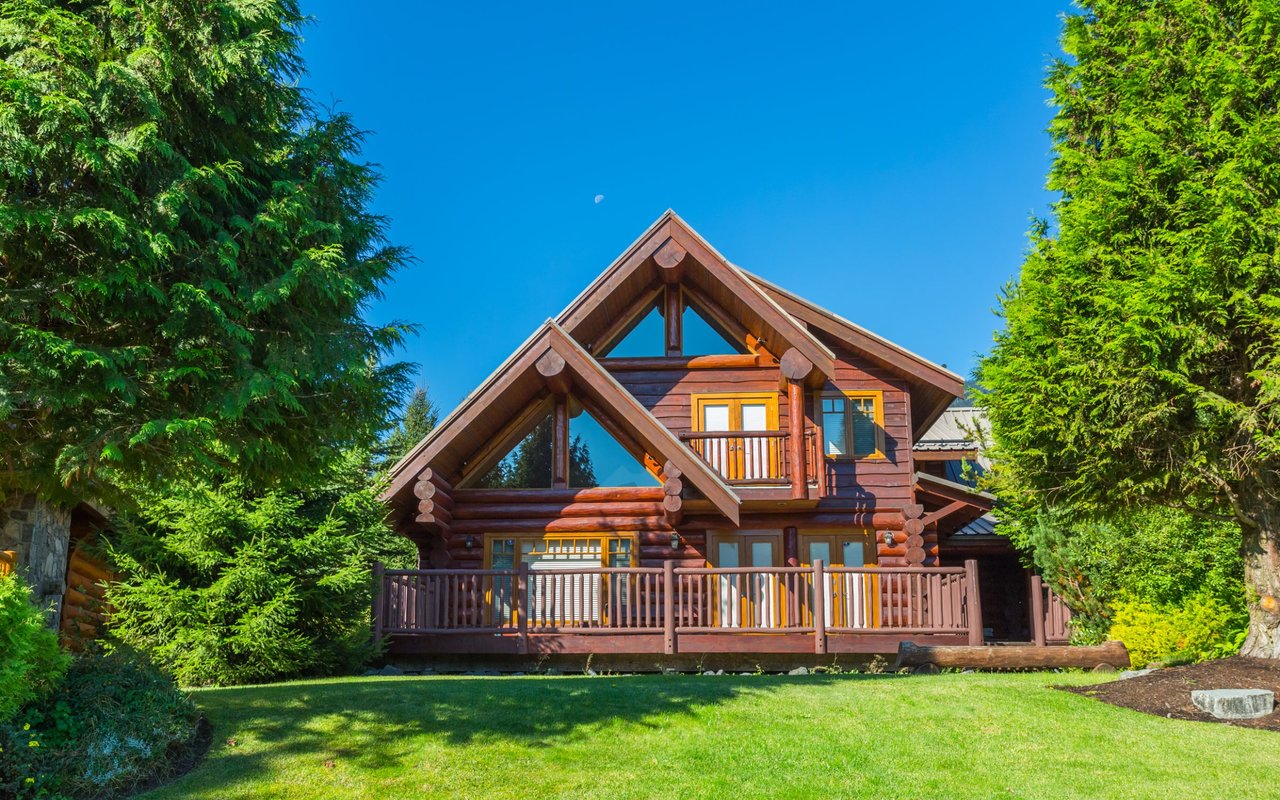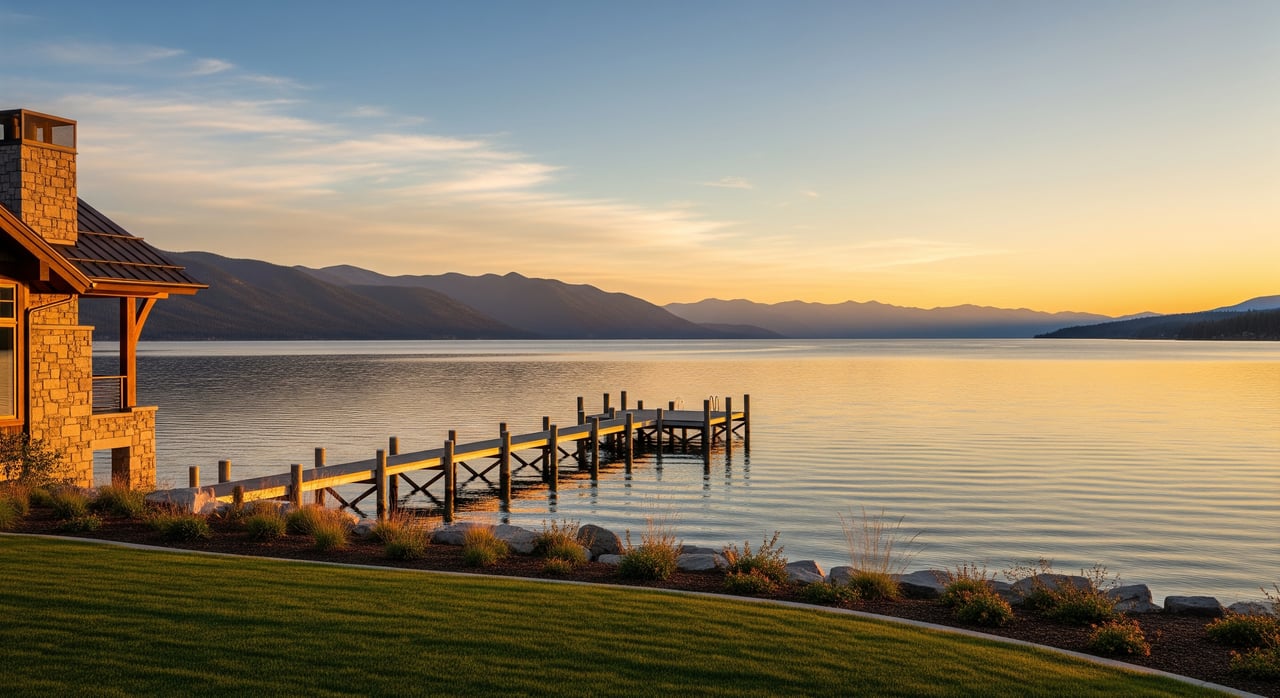
Thinking about a lakefront home in Woods Bay but unsure how water rights work on Flathead Lake? You are not alone. Water rights and shoreline rules here are unique, and the details can affect your plans for irrigation, a dock, or even simple lake access. In this guide, you will learn the essentials of Montana water rights, how shoreline boundaries are defined, the permits you may need, where to find records, and a practical due-diligence plan before you write an offer. Let’s dive in.
What water rights mean here
Buying on Flathead Lake is not just about the land. In Montana, water use is governed by an appropriative system that is separate from your deed. That means a parcel can have lake access without having a legal right to pump or divert water. You need to confirm any claimed rights with the proper records.
Appropriative rights are separate
Montana’s system allocates rights on a “first in time, first in right” basis. Rights are granted for beneficial uses and are recorded with the state. A seller’s historical use, like lawn watering or domestic supply from the lake, should be supported by a recorded water right. Ask for the specific right numbers and review the abstracts.
Priority dates matter
A right’s priority date can determine who gets to use water during shortages. Older (senior) rights are generally fulfilled before newer (junior) rights. When comparing properties in Woods Bay, include the right’s priority date and use type in your evaluation.
Domestic vs irrigation
Different uses are recorded and limited differently. A small household use may be treated one way, while irrigation or larger withdrawals are handled another way. Do not assume a domestic setup covers lawn irrigation or a pond fill. Verify the use types, volumes, and points of diversion.
Shoreline boundaries and OHWM
The ordinary high-water mark (OHWM) is a key boundary line along Flathead Lake. It often divides privately owned upland from the bed of navigable waters in Montana. Where a water body is navigable, the lakebed below the OHWM is typically held by the state for public use.
Why OHWM location matters
The OHWM determines where your true waterfront boundary lies. It affects what you own, where public interests apply, and where you can place structures. A current survey that shows the OHWM and the location of any improvements is one of the most valuable documents you can have in Woods Bay.
Lakebed ownership and access
Ownership of the bed and the public’s rights depend on navigability and historical law. This can influence your ability to place or expand a dock, build shore protection, or restrict use. Always confirm the OHWM on your parcel and the rules that apply below that line.
Docks and shoreline structures
A recorded water right does not grant you automatic permission to build a dock, boathouse, riprap, or seawall. Shoreline work often involves multiple reviews at the county, state, and federal levels. Plan for permitting before you design or commit to any new structure.
Permits and agencies you will see
You will likely interact with a few agencies as you research and plan:
- Montana DNRC (Water Rights Bureau): Water-right records and abstracts, plus change applications for point of diversion, place of use, or nature of use.
- Montana Water Court: Adjudication records for historic claims and decrees that confirm priority and scope.
- Lake County (Clerk & Recorder; Planning/Building/Zoning): Deeds, easements, plats, HOA documents, and shoreline or building permits.
- Montana Fish, Wildlife & Parks (FWP): Boating rules and aquatic invasive species guidance. FWP may have dock and public access guidelines.
- U.S. Army Corps of Engineers: Federal permits for structures in navigable waters and work that affects wetlands.
- Montana DEQ and local health department: Septic and wastewater siting, plus any shore disturbance that affects water quality.
- Local conservation districts and watershed groups: Good technical resources for lake health and best practices.
Where to find the records
DNRC and Water Court
Start with DNRC water-right records and abstracts. Review the claim or permit number, priority date, type of use, quantity limits, and the point of diversion. Note any protests, enforcement history, or pending change applications. Follow up with the Montana Water Court to confirm whether the right has been adjudicated and included in a decree.
Lake County offices
Check the Clerk & Recorder for deed history, shoreline easements, and subdivision plats. Ask Planning and Building for any past permits on docks, riprap, or shoreline hardening. Review local code for setbacks and standards that apply to Woods Bay lakefront lots.
Surveys and aerials
Order a recent boundary survey that clearly shows the OHWM and all shoreline structures. Compare older and newer aerial imagery to see if the shoreline has shifted or if any dock footprints appear to encroach on adjacent property or public bed.
Due-diligence checklist for buyers
Use this step-by-step plan to stay on track.
Before touring or early inquiry
- Ask the listing agent for water-right documents or abstracts tied to any pump or diversion from Flathead Lake.
- Request copies of permits for existing docks, seawalls, riprap, or shoreline hardening.
- Request a survey showing the OHWM and all structures near the shore.
- Ask for HOA or subdivision rules about docks, slips, or shared access if applicable.
- Ask whether there have been DNRC inspections, change applications, or enforcement actions.
Pre-offer and under contract
- Include contingencies to verify water-right ownership, scope, and transferability via DNRC abstracts and Water Court records.
- Confirm that all existing docks and shoreline structures were properly permitted and remain compliant.
- Ensure the survey shows the OHWM and check for any encroachments or easements.
- Confirm septic and wastewater approvals for your intended use, especially for full-time occupancy.
- If no recent survey exists, order one that marks the OHWM and structure footprints.
- Have the title company flag recorded shoreline easements and note water-right exceptions. Ask about survey endorsements.
If moving toward closing
- Obtain written copies of all dock and shoreline permits and approvals.
- Verify permit paths for any planned work, such as dock expansion or new riprap.
After closing
- If you plan to change a diversion, add a dock, or expand a shoreline structure, budget time for DNRC change applications, county reviews, and possible federal permits.
Red flags to watch in Woods Bay
- No recorded water right for a property that has historically irrigated or pumped from the lake.
- Conflicting claims, competing priority dates, or protests in DNRC or Water Court records.
- Missing permits for an existing dock or shoreline hardening.
- A survey that shows structures extending below the OHWM in a way that suggests encroachment on public bed or neighbors.
- Pending enforcement actions or change applications tied to the property.
- Location within areas where wetlands rules add permitting complexity.
Who to put on your team
- Buyer’s agent: Request documents, manage deadlines, and coordinate the process from day one.
- Local land surveyor: Locate the OHWM, mark boundaries, and map dock or shoreline structures.
- Water-rights or Montana real-estate attorney: Interpret DNRC abstracts and Water Court decrees and advise on transfers or changes.
- DNRC Water Rights Bureau contact: Help confirm records and explain change or transfer steps.
- Title company/title examiner: Identify easements, exclusions, and possible endorsements.
- Civil engineer or hydrologist: Assist with technical reports for larger diversions or shore modifications.
- Dock contractor with Flathead Lake experience: Advise on feasible sizes and permit requirements.
- County planning/building staff and relevant state contacts: Confirm permit steps and timelines.
Timelines and expectations
- Record research: From a few days to a few weeks, depending on document availability.
- Survey with OHWM: Weeks to months, based on surveyor schedule and site access.
- Dock or shoreline permits: Expect multiple months. More agencies often means longer timelines.
- Water-right change applications: Many months to years if protests or objections arise.
- Legal review and title work: Often a few weeks, longer for complex issues.
Smart contract language ideas
Consider adding clear contingency elements that match your risk tolerance:
- Seller to provide copies of all water-right abstracts or documents showing legal authority to divert lake water.
- Seller to provide permits for docks and shoreline structures and a current survey showing the OHWM and all improvements.
- Buyer’s right to obtain and approve professional reviews by a surveyor and a water-rights attorney within a set timeframe.
- Buyer may cancel or renegotiate if permits are missing or water-right records show unresolved claims or material defects.
Local context for Woods Bay
Flathead Lake is a high-value, high-use recreation resource, and shoreline work is carefully reviewed. In Woods Bay, small private docks and seasonal structures are common, but past permitting is not guaranteed. HOA or subdivision covenants may add private rules about dock size, shared slips, or maintenance that sit on top of county and state standards.
Work with a local advisor
If you want a smooth Woods Bay purchase, focus on clear records, a current OHWM survey, and a plan for permits. The right team can save you months of delay and help you avoid costly surprises. If you would like a coordinated approach to record collection, expert referrals, and offer strategy, reach out to Corey Olofson for a tailored buying plan.
FAQs
Do water rights transfer with a Woods Bay home?
- Not always. Some rights are tied to a parcel, but others are held separately or have conditions. Confirm links between the right and the property through DNRC and Water Court records.
Who owns the lakebed by my lot on Flathead Lake?
- It depends on navigability and historical law. For many navigable waters, the state holds the bed below the OHWM. Your ability to build or expand a dock depends on multiple jurisdictions and permits.
Can I pump Flathead Lake water for my lawn?
- Only if you have a legal right or applicable exemption. Irrigation typically requires a recorded right or DNRC-approved change. Verify quantity, use type, and priority date before you plan.
What if the seller used the lake for years without a record?
- Informal historical use is risky without a recorded right or adjudication. Do not assume security of use without confirming records and getting professional guidance.
Will title insurance cover my dock or water use?
- Title insurance usually focuses on land title. Water-right issues are often excluded. Ask your title company to list exceptions and available endorsements, and coordinate legal review if needed.